
Healthy, strong hair starts from within, and your daily diet plays a bigger role than you might think. If you’re experiencin excessive hair fall, thinning hair, or slow hair growth, nutritional deficiencies could be one of the contributing factors. According to the American Academy of Dermatology, losing 50-100 hairs per day is normal, but persistent or excessive hair loss may require lifestyle changes or medical evaluation. Research also shows that deficiencies in nutrients such as protein, iron, zinc, vitamin D, and biotin can affect normal hair growth. Choosing the best foods for hair growth helps nourish hair follicles, supports the natural hair growth cycle, and promotes healthier hair. In this guide, you’ll discover the best foods for hair growth, the essential nutrients your hair needs, and practical diet tips to support stronger, healthier hair naturally. For more expert advice, explore our Hair Growth Tips and Natural Hair Solutions
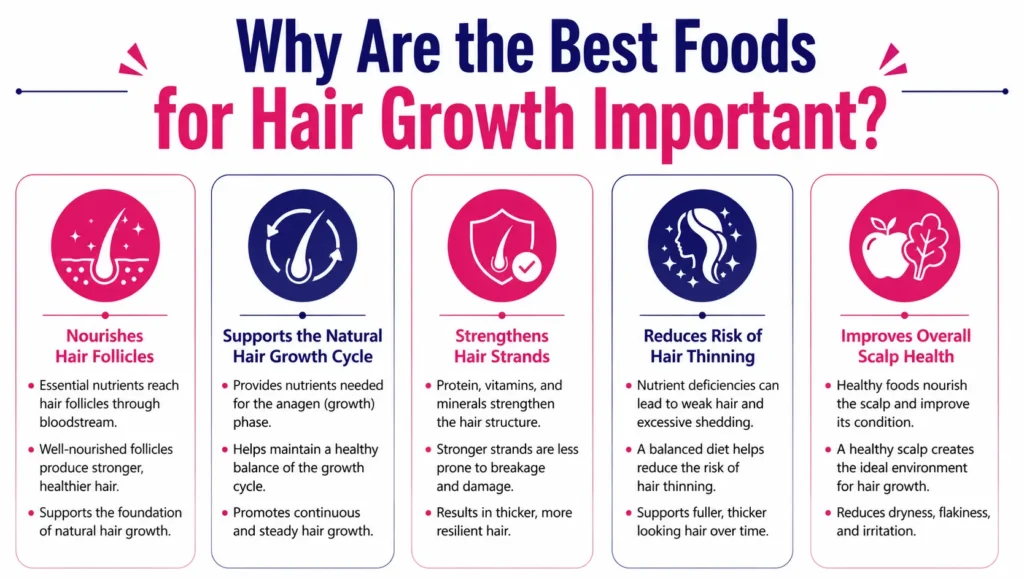
Healthy hair starts with proper nutrition. Your hair follicles need a steady supply of protein, vitamins, minerals, and healthy fats to produce strong, healthy strands. According to the American Academy of Dermatology, the average person loses 50-100 hairs each day, making continuous hair growth essential. Eating the best foods for hair growth helps nourish hair follicles, supports the natural hair growth cycle, and reduces the risk of nutrient-related hair thinning. While diet cannot treat every type of hair loss, a balanced eating plan gives your hair the nutrients it needs to grow healthier, stronger, and more resilient over time.
Hair grows in a continuous cycle that includes three main phases: anagen (growth), catagen (transition), and telogen (resting). The anagen phase lasts between 2 and 7 years, and about 85-90% of your hair remains in this active growth stage at any given time. Hair follicles rely on oxygen and nutrients delivered through the bloodstream to produce new hair cells. When your body receives enough protein, iron, zinc, and essential vitamins, follicles work more efficiently and support healthier growth. Eating the best foods for hair growth helps provide these nutrients, promoting stronger hair while supporting the natural hair cycle. Genetics, age, hormones, and overall health also influence how quickly and effectively your hair grows.
Your hair is one of the fastest-growing tissues in your body, so it needs a consistent supply of nutrients every day. Poor nutrition can weaken hair follicles, slow growth, and increase hair shedding. Choosing the best foods for hair growth helps your body deliver the nutrients needed for healthy hair production and scalp health.
Key nutrients that support healthy hair include:
A balanced diet rich in these nutrients supports healthier, shinier, and stronger hair over time. Scientific studies have also shown that nutrient deficiencies may contribute to different types of hair loss. Read more from the NIH Nutrition and Hair HealthResearch
A healthy diet supports hair growth, but it cannot solve every type of hair loss. The best foods for hair growth provide essential nutrients that strengthen existing hair and support healthy follicles. However, conditions such as genetic hair loss, hormonal imbalances, thyroid disorders, or autoimmune diseases often require professional evaluation and treatment.
For example:
The best approach combines a nutrient-rich diet, healthy lifestyle habits, and professional care when persistent hair loss occurs.
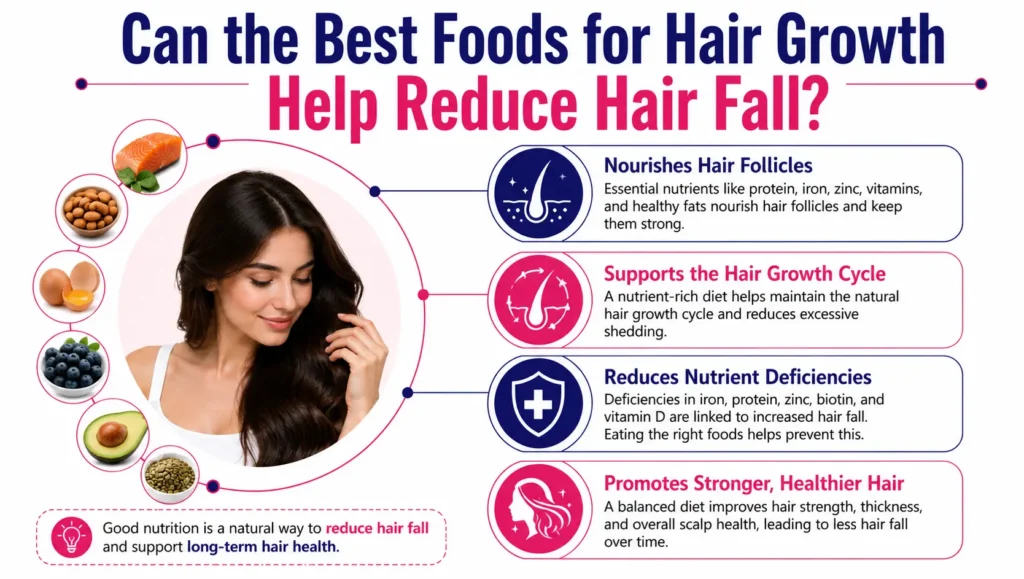
Including the best foods for hair growth in your daily diet can help reduce hair fall caused by poor nutrition and support stronger, healthier hair. Hair follicles need protein, iron, zinc, vitamins, and healthy fats to function properly. When your body receives these nutrients regularly, it can maintain the natural hair growth cycle more effectively. According to the American Academy of Dermatology, losing 50-100 hairs per day is normal, but excessive shedding may signal a nutritional deficiency or another underlying condition. While the best foods for hair growth support healthy hair, persistent or sudden hair loss should always be evaluated by a qualified healthcare professional.
Nutritional deficiencies can interrupt the normal hair growth cycle and lead to increased hair shedding. Hair follicles actively produce new hair cells, so they require a constant supply of nutrients to stay healthy. Research has linked deficiencies in iron, zinc, vitamin D, protein, and biotin with certain types of hair loss. Eating the best foods for hair growth helps supply these essential nutrients and supports stronger hair when poor nutrition contributes to the problem.
Common nutrient deficiencies that may affect hair include:
A balanced diet supports healthy hair growth while improving overall nutritional health.
The best foods for hair growth provide valuable nutritional support, but they cannot treat every cause of hair loss. Some conditions require medical diagnosis and targeted treatment to prevent further hair thinning. Seeking professional advice early can help identify the underlying cause and improve treatment planning.
| Condition | Why Medical Treatment May Be Needed |
| Pattern hair loss | Often linked to genetics and hormonal factors |
| Alopecia areata | Autoimmune condition that requires medical evaluation |
| Thyroid disorders | Hormonal imbalance can contribute to excessive hair loss |
| Scalp infections | Treatment helps control infection and protect hair follicles |
| Severe nutritional deficiencies | Blood tests may identify deficiencies requiring supplementation |
| Sudden or patchy hair loss | Prompt evaluation helps determine the underlying cause |
A healthcare professional can recommend the most appropriate treatment based on your diagnosis. If you’re experiencing ongoing hair fall, explore our Hair Fall Treatment options
The best results often come from combining the best foods for hair growth with professional hair care and healthy lifestyle habits. A nutrient-rich diet nourishes hair follicles from within, while personalized treatments address medical conditions, scalp problems, or genetic hair loss that nutrition alone cannot resolve. This comprehensive approach supports healthier hair and long-term scalp health.
Examples include:
Combining healthy eating with expert guidance provides a well-rounded strategy for supporting healthy hair growth and managing ongoing hair concerns.
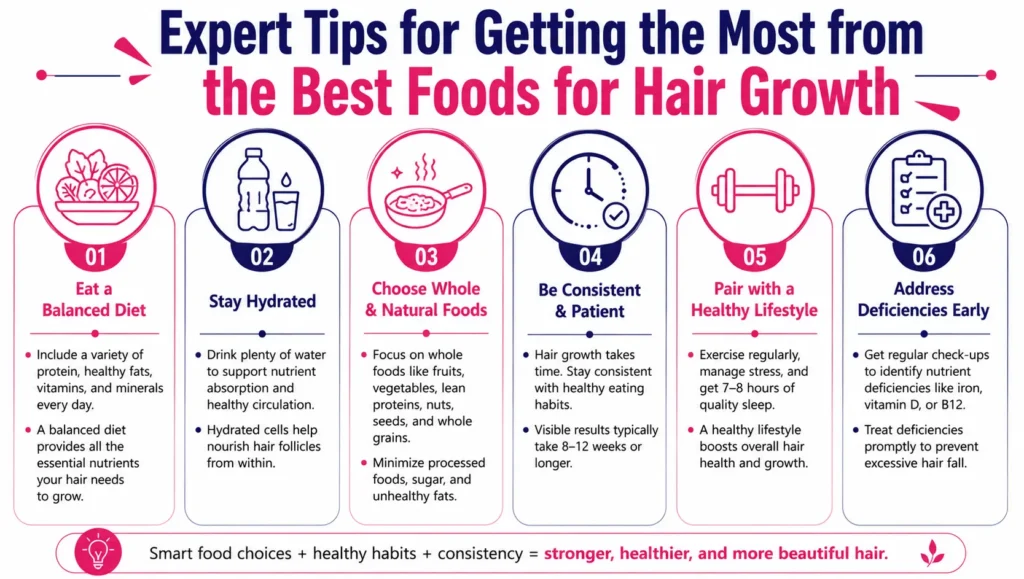
Choosing the best foods for hair growth is only one part of maintaining healthy hair. Your daily eating habits, hydration, sleep, and overall lifestyle also influence how well your hair follicles function. Hair grows in cycles, so visible improvements often take several months of consistent nutrition. According to the American Academy of Dermatology, healthy adults naturally lose 50-100 hairs each day, making continuous nourishment important. Instead of relying on a single superfood, eat a balanced variety of nutrient-rich foods every day. Combining the best foods for hair growth with healthy lifestyle habits gives your hair the nutrients it needs to grow stronger and healthier.
A balanced diet provides the wide range of nutrients your hair needs to grow and stay healthy. No single food contains every vitamin, mineral, and protein required for optimal hair health. Including the best foods for hair growth from different food groups helps nourish hair follicles while supporting your overall well-being. Fill your plate with lean proteins, whole grains, fruits, vegetables, healthy fats, dairy, legumes, nuts, and seeds. These foods supply protein, iron, zinc, biotin, vitamins A, C, D, and E, along with omega-3 fatty acids. Eating a colorful and varied diet every day helps reduce the risk of nutritional deficiencies that may contribute to hair thinning.
Protein forms the building blocks of healthy hair because hair consists mainly of keratin, a structural protein. If your diet lacks adequate protein, your body may prioritize essential organs over hair production, which can contribute to increased hair shedding. Including the best foods for hair growth that are rich in protein helps support stronger hair and healthy hair follicles.Learn more about daily protein requirements from the Harvard T.H. Chan School of Public Health
Good protein sources include:
Including a protein-rich food in every meal supports healthy hair while helping meet your daily nutritional requirements.
Hydration plays an important role in supporting healthy hair and scalp function. Although drinking more water alone will not make hair grow faster, proper hydration helps your body transport nutrients to hair follicles more efficiently. Including the best foods for hair growth alongside adequate water intake supports overall health and creates a healthier environment for your scalp. Water also helps maintain normal skin hydration, including the scalp.
For example:
Staying well hydrated, together with a balanced diet, supports healthy hair and overall wellness.
Eating the best foods for hair growth supports healthy hair, but nutrition alone cannot solve every hair problem. If your hair continues to thin despite following a balanced diet, it is time to seek professional advice. According to the American Academy of Dermatology, losing 50-100 hairs per day is normal. However, persistent shedding, sudden hair loss, or noticeable bald patches may indicate an underlying medical condition. A hair specialist can identify the root cause through a detailed evaluation and recommend appropriate treatment. Early diagnosis often improves the chances of managing hair loss effectively while protecting your existing hair.
Persistent hair fall deserves professional attention, especially if it continues for several weeks or months. While the best foods for hair growth provide essential nutrients, ongoing hair shedding may result from factors such as hormonal changes, thyroid disorders, stress, nutritional deficiencies, medications, or genetic hair loss. Ignoring the problem may allow it to progress over time. A hair specialist can review your medical history, examine your scalp, and recommend appropriate tests if needed. Identifying the underlying cause early allows for a more targeted treatment plan. Along with professional care, maintaining a balanced diet and healthy lifestyle supports stronger hair and overall scalp health.
Sudden hair loss often develops quickly and should not be ignored. Although the best foods for hair growth help support healthy hair, rapid shedding may indicate a medical condition, illness, medication side effect, or severe physical or emotional stress. Prompt evaluation helps identify the cause and guides appropriate treatment.
| Possible Cause | Why You Should Consult a Hair Specialist |
| High fever or recent illness | Hair shedding may occur after physical stress and needs evaluation. |
| Thyroid disorders | Hormonal imbalance can affect the hair growth cycle. |
| Certain medications | Some medicines may contribute to increased hair loss. |
| Nutritional deficiencies | Blood tests can identify deficiencies that require treatment. |
| Severe emotional stress | Stress-related hair shedding may need professional guidance. |
| Autoimmune conditions | Early diagnosis helps manage conditions affecting hair follicles. |
Seeking timely medical advice improves the chances of identifying and treating the underlying cause.
Patchy hair loss often appears as one or more round or irregular bald spots and usually requires professional evaluation. Although eating the best foods for hair growth supports healthy hair, nutrition alone cannot treat conditions that cause localized hair loss. Patchy hair loss may result from autoimmune disorders, fungal scalp infections, or other medical conditions that need specific treatment. Early diagnosis helps prevent further hair loss and supports better long-term outcomes.
Examples of situations that require medical attention include:
A hair specialist can determine the underlying cause and recommend the most appropriate treatment plan while advising you on maintaining healthy hair through balanced nutrition.
Including the best foods for hair growth in your daily diet is a practical step toward maintaining healthier, stronger hair. Nutrient-rich foods such as eggs, fatty fish, spinach, nuts, seeds, legumes, fruits, and leafy vegetables provide the protein, iron, zinc, vitamins, and healthy fats that hair follicles need to function well. While the best foods for hair growth can help reduce hair fall caused by nutritional deficiencies and support the natural hair growth cycle, they cannot address every cause of hair loss. Conditions such as genetic hair loss, hormonal imbalances, thyroid disorders, or scalp diseases often require professional evaluation and personalized treatment.
If you notice persistent hair fall, sudden hair shedding, or thinning despite eating a balanced diet, don’t ignore the signs. Early diagnosis can help identify the underlying cause and improve your treatment options.Ready to Support Your Hair Growth Journey? At HairPro16, our experienced hair specialists provide comprehensive hair and scalp assessments to identify the root cause of your hair concerns. We combine personalized treatment plans, expert guidance, and lifestyle recommendations to help you achieve healthier hair. Whether you’re dealing with ongoing hair fall, thinning hair, or scalp issues, we’re here to help.
Book your consultation with HairPro16 today and take the next step toward healthier, stronger hair with professional care tailored to your individual needs.
1. What are the best foods for hair growth?
Eggs, fatty fish, spinach, nuts, seeds, lentils, berries, sweet potatoes, and citrus fruits are among the best foods for hair growth because they provide essential nutrients.
2. Which vitamin deficiency causes hair loss?
Low levels of vitamin D, iron, zinc, biotin, and vitamin B12 can contribute to hair thinning and increased hair fall.
3. Can the best foods for hair growth reduce hair fall?
Yes, the best foods for hair growth can reduce hair fall caused by nutritional deficiencies, but they cannot treat genetic or hormonal hair loss.
4. Which fruit is best for hair growth?
Oranges, guava, kiwi, berries, and strawberries are excellent choices because they are rich in vitamin C and antioxidants.
5. Are eggs good for hair growth?
Yes. Eggs provide high-quality protein and biotin, making them one of the best foods for hair growth.
6. How much protein do I need for healthy hair?
Most adults need around 0.8 grams of protein per kilogram of body weight each day, depending on age and activity level.
7. Can vegetarians support healthy hair growth?
Yes. Lentils, beans, tofu, paneer, dairy, nuts, and seeds provide nutrients that support healthy hair.
8. How long does it take to see results from a healthy diet?
You may notice healthier hair after 3–6 months of consistently eating a balanced, nutrient-rich diet.
9. What foods should I avoid for healthier hair?
Limit processed foods, sugary snacks, sugary drinks, and crash diets to support overall hair health.
10. When should I consult a hair specialist?
Consult a specialist if you experience persistent hair fall, sudden shedding, patchy hair loss, or scalp problems despite maintaining a healthy diet.