
INTRODUCTION:
Baldness can affect confidence, appearance, and emotional comfort for both men and women. Some people notice gradual thinning near the crown, while others see a receding hairline, widening partitions, patchy bald spots, or excessive shedding during hair wash. In Chennai, this problem becomes more common because stress, humidity, pollution, hard water exposure, poor nutrition, dandruff, and hormonal imbalance can all weaken scalp health over time.
The right Baldness Treatment Chennai approach should not focus only on covering bald spots or giving temporary cosmetic improvement. It should begin by identifying the actual cause of hair loss, checking scalp condition, understanding follicle strength, and creating a personalized plan that supports natural hair growth. The American Academy of Dermatology explains that effective hair loss treatment starts with finding the cause, because different types of hair loss need different treatment approaches.
Hair loss may happen due to heredity, hormonal changes, medical conditions, scalp infections, stress, poor nutrition, or certain medicines. Mayo Clinic also notes that hair loss may be temporary or permanent depending on the cause. This is why people should avoid random oils, shampoos, and internet remedies without proper scalp evaluation.
A professional Baldness Treatment Chennai plan can help improve scalp health, strengthen weak follicles, reduce excessive shedding, and support healthier regrowth naturally when treatment starts at the right time. Early action matters because active follicles usually respond better than severely damaged or inactive follicles.
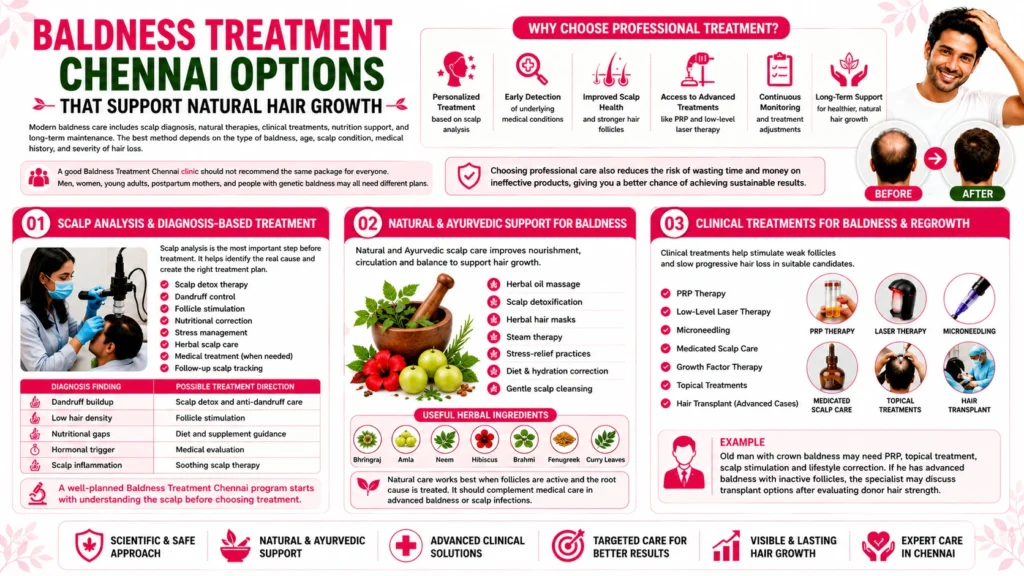
Modern baldness care includes scalp diagnosis, natural therapies, clinical treatments, nutrition support, and long-term maintenance. The best method depends on the type of baldness, age, scalp condition, medical history, and severity of hair loss.
A good Baldness Treatment Chennai clinic should not recommend the same package for everyone. Men, women, young adults, postpartum mothers, and people with genetic baldness may all need different plans.
Scalp analysis is one of the most important steps before starting treatment. It helps identify follicle density, dandruff buildup, oil imbalance, inflammation, scalp dryness, thinning pattern, and breakage. In some cases, doctors may also suggest blood tests to check thyroid function, iron levels, Vitamin D, or hormonal imbalance.
Mayo Clinic mentions that diagnosis may include blood tests, pull tests, scalp biopsy, or light microscopy depending on the case. This shows why professional evaluation is better than guessing.
A diagnosis-based treatment may include:
| Diagnosis Finding | Possible Treatment Direction |
| Dandruff buildup | Scalp detox and anti-dandruff care |
| Low hair density | Follicle stimulation |
| Nutritional gaps | Diet and supplement guidance |
| Hormonal trigger | Medical evaluation |
| Scalp inflammation | Soothing scalp therapy |
A well-planned Baldness Treatment Chennai program starts with understanding the scalp before choosing treatment.
Natural and Ayurvedic scalp care can support hair growth by improving scalp nourishment, circulation, and balance. These therapies may help people with dryness, dandruff-related shedding, weak roots, stress-related hair fall, or early thinning.
Common natural support methods include:
Useful herbal ingredients may include bhringraj, amla, neem, hibiscus, brahmi, fenugreek, and curry leaves. These ingredients can support scalp comfort and hair texture when used consistently. However, natural care works best when follicles remain active and the root cause receives proper attention.
A natural Baldness Treatment Chennai plan may combine herbal therapies with scalp diagnosis, nutrition support, and clinical guidance when needed. Natural methods should not replace medical care in advanced baldness, severe patchy hair loss, or scalp infections.
Clinical treatments help stimulate weak follicles and slow progressive hair loss in suitable candidates. These may include PRP therapy, low-level laser therapy, microneedling, growth factor therapy, topical medication, dandruff treatment, or infection control.
Cleveland Clinic explains that hair loss treatment varies based on the cause and may include medication, surgery, or light therapy. Mayo Clinic also notes that minoxidil may help many people regrow hair or slow hair loss, but continued use may be needed to maintain benefits.
Common clinical options include:
A professional Baldness Treatment Chennai plan may combine natural and clinical methods depending on severity. Early-stage baldness may respond well to non-surgical care, while advanced baldness may need stronger intervention.
Example:
Old man with crown baldness may need PRP, topical treatment, scalp stimulation, and lifestyle correction. If he has advanced baldness with inactive follicles, the specialist may discuss transplant options after evaluating donor hair strength.
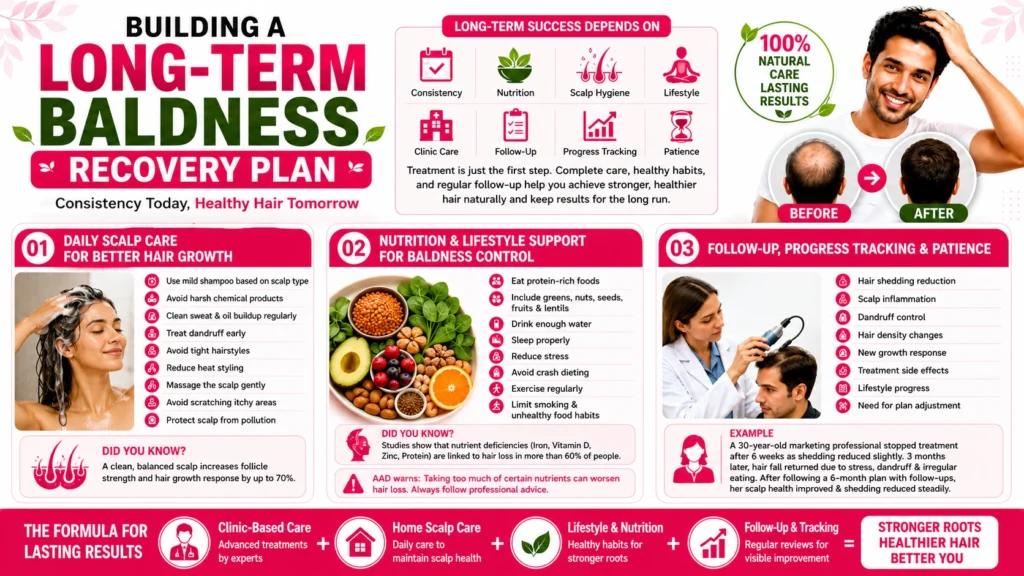
Starting treatment is only the first step. Long-term results depend on consistency, maintenance, nutrition, scalp hygiene, and follow-up. Many people see early improvement and stop care too soon. Then dandruff, stress, poor diet, or scalp buildup returns and hair fall begins again.
A successful Baldness Treatment Chennai plan should include clinic-based care, home scalp care, lifestyle correction, and progress tracking.
Daily scalp care protects follicles from buildup, dryness, and irritation. In Chennai, sweat and pollution make scalp hygiene even more important. A dirty or inflamed scalp can weaken roots and reduce treatment response.
Healthy scalp habits include:
People with oily scalp may need more frequent gentle cleansing. People with dry scalp may need hydration and soothing care. The routine should match scalp type instead of copying someone else’s method.
A good Baldness Treatment Chennai specialist usually gives home-care guidance along with clinical treatment.
Hair follicles need nutrients to stay active. Poor nutrition can weaken roots and slow regrowth. Protein, iron, zinc, Vitamin D, B vitamins, and omega-3 fatty acids all support healthier hair and scalp function.
Important lifestyle habits include:
Stress also plays a major role in hair shedding. Poor sleep, long work hours, and mental pressure can disturb the hair growth cycle. Nutrition and stress control help create a better internal environment for hair recovery.
AAD warns that taking too much of certain nutrients can worsen hair loss, so supplements should match actual deficiency and professional advice. A complete Baldness Treatment Chennai plan should include nutrition guidance instead of relying only on external products.
Baldness recovery takes time. Hair grows slowly, and weak follicles need repeated support before visible improvement appears. Many people stop treatment after one or two months because they expect fast results. This is one of the biggest reasons treatments fail.
Follow-up care helps track:
Progress photos, scalp checks, and regular review sessions help both patient and specialist understand whether the plan is working. If hair fall reduces but density does not improve, the specialist may adjust treatment. If dandruff returns, scalp therapy may need stronger focus.
A long-term Baldness Treatment Chennai plan should focus on realistic results, patience, and consistency.
Example:
A 30-year-old marketing professional stopped treatment after six weeks because shedding reduced slightly. Three months later, hair fall returned because stress, dandruff, and irregular eating continued. When she followed a six-month routine with follow-ups, her scalp health improved and shedding reduced steadily.
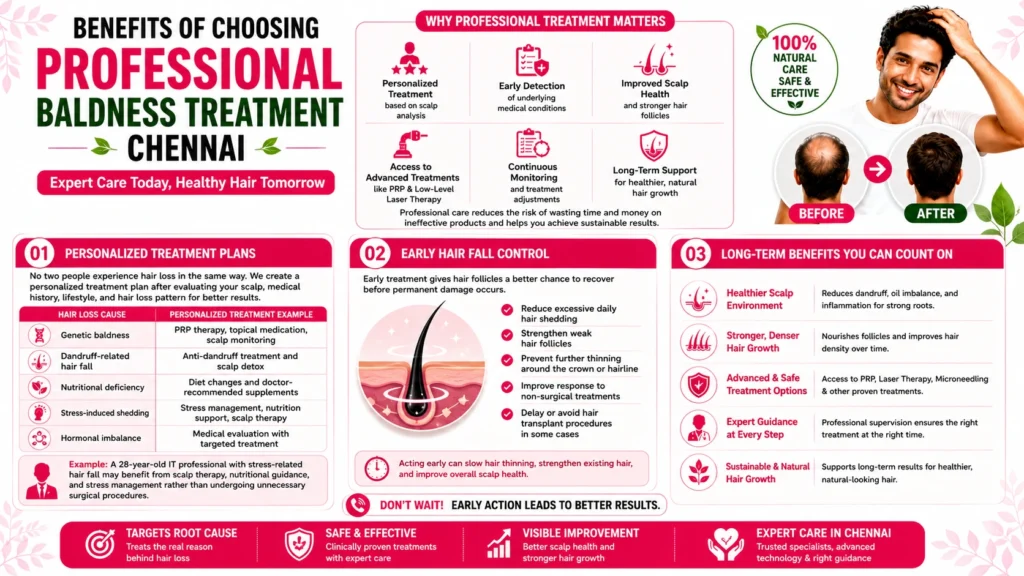
Professional Baldness Treatment Chennai offers more than temporary hair fall control. It focuses on identifying the root cause and creating a treatment plan that supports long-term hair growth. According to the American Academy of Dermatology, early diagnosis can improve treatment outcomes because active hair follicles respond better than damaged ones. Instead of trying random oils or home remedies, expert guidance helps you choose treatments that match your scalp condition and hair loss pattern.
Benefits include:
Choosing professional care also reduces the risk of wasting time and money on ineffective products, giving you a better chance of achieving sustainable results.
No two people experience hair loss in the same way. A professional clinic creates a personalized treatment plan after evaluating your scalp, medical history, lifestyle, and hair loss pattern. This targeted approach improves the chances of better results compared to using generic products. Studies suggest that early, customized treatment can significantly slow hair loss progression in suitable candidates.
| Hair Loss Cause | Personalized Treatment Example |
| Genetic baldness | PRP therapy, topical medication, scalp monitoring |
| Dandruff-related hair fall | Anti-dandruff treatment and scalp detox |
| Nutritional deficiency | Diet changes and doctor-recommended supplements |
| Stress-induced shedding | Stress management, nutrition support, scalp therapy |
| Hormonal imbalance | Medical evaluation with targeted treatment |
For example, a 28-year-old IT professional with stress-related hair fall may benefit from scalp therapy, nutritional guidance, and stress management rather than undergoing unnecessary surgical procedures.
Early treatment gives hair follicles a better opportunity to recover before permanent damage occurs. Research shows that many hair loss treatments deliver better results when people begin treatment during the early stages instead of waiting until bald patches become larger. Acting quickly can slow hair thinning, strengthen existing hair, and improve overall scalp health.
For example, someone who notices increased hair fall while washing or combing their hair can seek professional evaluation before the condition worsens.
Early intervention can help you:
Recognizing the first signs of hair loss and consulting a specialist early often leads to better long-term hair growth and healthier scalp conditions.
CONCLUSION:
Baldness can develop due to genetics, hormonal imbalance, stress, dandruff, poor nutrition, scalp inflammation, hard water exposure, pollution, or chemical damage. Since every person has a different cause, the same treatment cannot work for everyone.
A proper Baldness Treatment Chennai plan should begin with scalp diagnosis, then move into personalized treatment and long-term maintenance. Natural scalp care, advanced follicle stimulation, nutrition correction, stress control, and regular follow-ups can all support healthier regrowth when used correctly.
Early treatment gives active follicles a better chance to recover. Instead of waiting for severe baldness, people should act when they notice crown thinning, receding hairline, widening partitions, dandruff, itching, or heavy shedding. With the right Baldness Treatment Chennai approach, both men and women can improve scalp health, reduce hair fall, and support stronger natural hair growth over time.
The best treatment depends on the cause and stage of baldness. Scalp analysis helps decide whether someone needs dandruff control, PRP, laser therapy, nutrition support, natural care, or medical treatment.
Early-stage thinning may improve with scalp care, nutrition, stress control, and follicle support. Advanced baldness may need clinical treatment or transplant evaluation.
Most people need several months to see visible changes. Reduced shedding may appear earlier, but regrowth usually needs consistent care.
Yes. Genetic male pattern baldness is common and often affects the hairline and crown area.
Yes. Women may experience diffuse thinning, widening partitions, postpartum hair fall, hormonal thinning, or patchy hair loss.
Dandruff can worsen shedding by irritating the scalp and weakening follicles. Treating dandruff supports better scalp health.
Stress can trigger excessive shedding and worsen existing hair loss. Managing stress improves treatment response.
PRP may help suitable candidates with weak but active follicles. A specialist should assess scalp condition first.
Yes. Protein, iron, zinc, Vitamin D, and B vitamins support stronger follicles and better hair growth.
Treatments often fail due to wrong diagnosis, irregular routine, untreated dandruff, poor nutrition, stress, or stopping treatment too early.