
Hair fall affects millions of people and often begins with everyday habits that damage the scalp and weaken hair strands. According to the American Academy of Dermatology, losing 50–100 hairs per day is normal, but persistent shedding may signal an unhealthy scalp, poor nutrition, stress, or an ineffective hair care routine for hair fall. The good news is that small, consistent changes can protect your hair and support healthier growth. From choosing the right shampoo and conditioner to eating nutrient-rich foods and following weekly scalp care, the right can make a noticeable difference. This complete daily guide explains practical, expert-backed steps to reduce hair fall, strengthen your hair, and promote long-term hair growth naturally .Want stronger, healthier hair? Start with this complete daily routine and pair it with the right products and treatments. Explore our guides on [Best Sulfate-Free Shampoo for Hair Fall], [How to Choose the Right Hair Oil for Hair Growth], and [Top Hair Care Tips for Healthy Hair] to build a complete hair care routine.
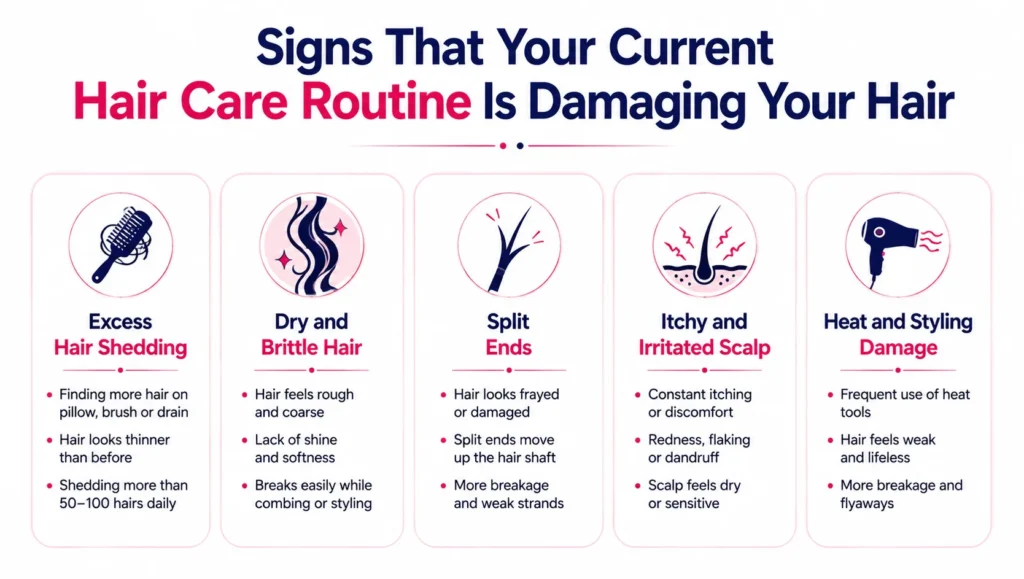
Your hair care routine for hair fall should strengthen your hair, not make it weaker. If you notice increased hair shedding, dryness, split ends, or an itchy scalp, your daily habits may need attention. According to the American Academy of Dermatology, losing 50–100 hairs per day is normal, but excessive shedding often points to stress, poor scalp care, harsh products, or heat damage. Brushing wet hair roughly, washing too often with strong shampoos, or skipping conditioner can also weaken hair over time. Recognizing these early signs helps you adjust your before minor damage turns into long-term hair loss.
One of the earliest signs that your hair care routine for hair fall needs improvement is excessive hair shedding. While losing 50–100 hairs daily is normal, finding large amounts of hair on your pillow, shower drain, or hairbrush may indicate a problem. Research published by the American Academy of Dermatology shows that stress, nutritional deficiencies, harsh styling, and improper scalp care commonly contribute to increased hair fall. Tight hairstyles, frequent heat styling, and aggressive brushing can also weaken hair strands and increase breakage. A balanced that includes gentle cleansing, proper conditioning, and regular scalp care can reduce unnecessary shedding and support healthier, stronger hair growth.
Dry and brittle hair often signals that your stripping away your hair’s natural moisture. Frequent shampooing with harsh cleansers, excessive heat styling, and chemical treatments damage the hair cuticle, making strands rough and prone to breakage. Healthy hair should feel soft, smooth, and flexible—not stiff or fragile.
Common signs include:
Adding a moisturizing conditioner, limiting heat styling, and using nourishing hair oils can restore hydration. A well-planned hair care routine for hair fall protects the hair shaft, reduces breakage, and helps maintain stronger, healthier-looking hair.
Split ends develop when the protective outer layer of the hair becomes damaged. They often appear in people who frequently use hot styling tools, chemical treatments, or rough towel drying. Once hair splits, the damage can travel upward, making strands weaker and more likely to break. Including regular trims and gentle hair care practices in your hair care routine for hair fall helps prevent further damage.
Common examples of habits that cause split ends include:
A consistent hair care routine for hair fall that focuses on hydration, gentle handling, and routine trimming keeps hair healthier and minimizes split ends over time.
Following a consistent can reduce breakage and improve overall hair health. While no routine can stop genetic hair loss on its own, healthy daily habits protect the hair shaft and support stronger growth. According to the American Academy of Dermatology, gentle hair care practices help American Academy of Dermatology’s healthy hair care tips minimize unnecessary hair damage and breakage. Start with a mild shampoo, use a nourishing conditioner, dry your hair carefully, and avoid excessive heat styling. Pair these habits with a balanced diet, proper hydration, and quality sleep for the best results. A simple followed consistently often delivers better long-term results than frequently changing products.
The first step in an effective hair care routine for hair fall is choosing a mild shampoo that cleanses your scalp without stripping away natural oils. Harsh shampoos can dry the scalp, weaken hair strands, and increase breakage. Dermatologists generally recommend washing your hair 2–3 times a week, although people with oily scalps may need more frequent cleansing. Focus the shampoo on your scalp instead of rubbing the hair lengths aggressively. Massage gently with your fingertips for about one minute to remove dirt, excess oil, and product buildup. Rinse thoroughly with lukewarm water, as hot water can dry both your scalp and hair. A gentle cleansing routine creates a healthy foundation for stronger, healthier hair.
Conditioner is an essential part of any hair care routine for hair fall because it smooths the hair cuticle, reduces friction, and helps prevent breakage while combing. The American Academy of Dermatology recommends conditioning after every shampoo, especially if your hair is dry, curly, color-treated, or damaged. Apply conditioner mainly to the mid-lengths and ends rather than the scalp, and leave it on for 2–3 minutes before rinsing.
| Do | Don’t |
| Apply conditioner after every wash | Skip conditioner regularly |
| Focus on mid-lengths and ends | Apply large amounts directly to the scalp |
| Rinse with cool or lukewarm water | Use very hot water |
| Choose a conditioner suited to your hair type | Use heavy products that weigh hair down |
A consistent hair care routine for hair fall with proper conditioning keeps hair softer, smoother, and less prone to breakage.
How you dry your hair can significantly affect your hair care routine for hair fall. Wet hair is more elastic and breaks more easily, so handle it gently after washing. Instead of rubbing your hair with a regular towel, blot excess water using a soft microfiber towel or a cotton T-shirt. Allow your hair to air-dry whenever possible, or use a hair dryer on a cool or low-heat setting if needed.
Examples of healthy drying habits:
These simple habits make your hair care routine for hair fall more effective by reducing breakage and protecting the hair shaft.
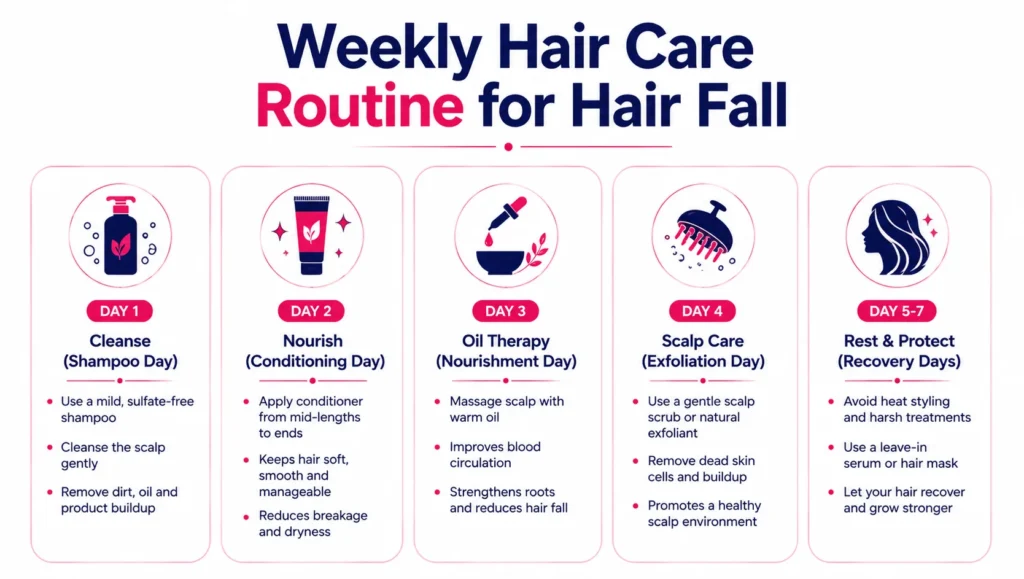
A weekly hair care routine for hair fall gives your scalp and hair the extra care they need beyond daily maintenance. While daily habits protect your hair, weekly treatments restore moisture, strengthen strands, and improve scalp health. According to the American Academy of Dermatology, gentle hair care practices help reduce breakage and support healthier hair over time. Set aside one or two days each week for an oil massage, deep conditioning, and a nourishing hair mask. These simple steps improve hair texture, reduce dryness, and make hair easier to manage. Following a consistent every week can help maintain stronger, healthier-looking hair.
An oil massage is an important part of a healthy hair care routine for hair fall because it nourishes the scalp and helps reduce dryness. Gently massaging the scalp for 5–10 minutes improves blood circulation and distributes natural oils more evenly. Oils such as coconut, almond, or rosemary-infused oil can moisturize the scalp and reduce hair breakage when used regularly. Warm the oil slightly before application, massage with your fingertips, and leave it on for at least 30–60 minutes before washing. Avoid using your nails or applying excessive pressure, as this can irritate the scalp. Performing an oil massage once or twice a week supports a balanced promotes healthier, stronger hair.
Deep conditioning restores moisture and strengthens hair strands, making it an essential part of a hair care routine for hair fall. Unlike regular conditioner, a deep conditioner penetrates the hair shaft and helps repair damage caused by heat styling, pollution, and chemical treatments. Most hair types benefit from deep conditioning once a week, while very dry or damaged hair may need it more often.
Benefits of deep conditioning include:
Adding this step to your hair care routine for hair fall keeps your hair hydrated, manageable, and more resistant to everyday damage.
A nourishing hair mask provides intensive care and supports a balanced improving hydration and strengthening weak hair. Hair masks contain concentrated ingredients that help repair dry, damaged strands and reduce breakage. Apply a hair mask once a week after shampooing, leave it on for 15–20 minutes, and rinse thoroughly for the best results.
Examples of effective hair masks include:
Using a weekly hair mask as part of your hair care routine for hair fall helps maintain smoother, healthier, and stronger hair over time.
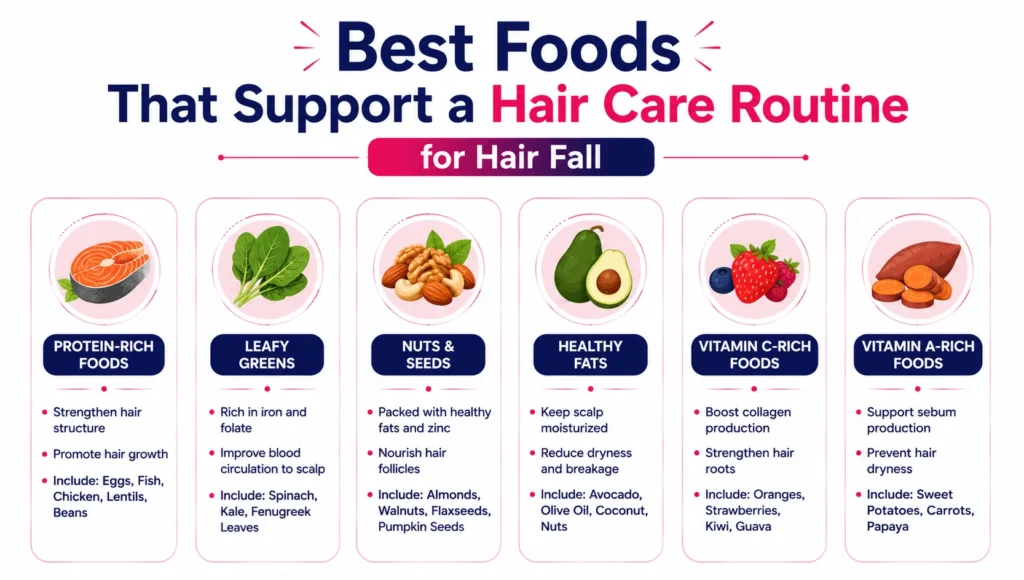
A healthy hair care routine for hair fall starts from within. Your hair follicles need a steady supply of nutrients to produce strong, healthy strands. According to the World Health Organization, deficiencies in key nutrients such as iron, zinc, and protein can affect overall health, including hair health. Eating a balanced diet rich in protein, vitamins, minerals, and healthy fats supports normal hair growth and reduces the risk of nutritional deficiencies that contribute to hair thinning. Nutrient-rich foods help nourish hair follicles, strengthen the hair shaft, and improve scalp health, creating the ideal environment for healthy hair growth. Staying well hydrated is equally important, as proper hydration supports scalp moisture and helps maintain stronger, more resilient hair. Combine nutritious foods with proper scalp care, gentle hair practices, regular exercise, quality sleep, and stress management for the best results. A complete hair care routine for works best when supported by healthy daily eating habits and an overall healthy lifestyle, helping you achieve stronger, shinier, and healthier hair over time.
Protein is the building block of hair because hair strands consist mainly of keratin, a structural protein. Without enough protein, your body prioritizes essential organs over hair growth, which can increase hair shedding. Research suggests that inadequate protein intake may contribute to weak, brittle hair and slower growth, especially in people with restrictive diets. Include high-quality protein sources in every meal to support a balanced hair care routine for hair fall. Excellent choices include eggs, fish, lean chicken, Greek yogurt, lentils, beans, soy products, and nuts. Spreading protein intake throughout the day helps provide a steady supply of amino acids that support stronger hair and healthier follicles.
Iron helps red blood cells carry oxygen to hair follicles, supporting healthy hair growth. Low iron levels can reduce oxygen delivery to the scalp and may contribute to increased hair shedding, particularly in women. Including iron-rich foods in your hair care routine for hair fall supports stronger, healthier hair. Pair plant-based iron sources with vitamin C-rich foods to improve absorption.
| Iron-Rich Food | Benefit for Hair Health |
| Spinach | Provides plant-based iron and folate |
| Lentils | Rich in iron and protein |
| Lean red meat | Contains highly absorbable heme iron |
| Chickpeas | Support healthy red blood cell production |
| Pumpkin seeds | Supply iron along with zinc |
| Fortified cereals | Help increase daily iron intake |
A nutrient-rich diet strengthens your supports healthy hair from the inside out.
Zinc plays an important role in maintaining healthy hair follicles and supporting normal hair growth. It also helps repair damaged tissues and supports the oil glands around hair follicles. A zinc deficiency may lead to increased hair shedding, dull hair, and slower growth. Adding zinc-rich foods to your hair care routine for hair fall helps maintain healthy scalp function and stronger hair.
Examples of zinc-rich foods include:
Eating a variety of these foods as part of your hair care routine supports healthy follicles, reduces the risk of nutrient deficiencies, and promotes stronger, more resilient hair over time.
Following the right hair care routine is one of the most effective ways to protect your hair, reduce breakage, and support healthy hair growth. Consistent habits such as gentle cleansing, proper conditioning, weekly scalp care, a nutrient-rich diet, and avoiding excessive heat can make a noticeable difference over time. While results may take a few months, a well-planned helps create the ideal environment for stronger, healthier hair. If your hair fall continues despite following a proper routine, it may indicate an underlying medical or scalp condition that requires professional evaluation. Taking action early gives you the best chance of maintaining healthy hair and preventing further hair loss. Your journey to healthier hair starts today. Follow this routine consistently and support your results with our expert guides on [Best Hair Growth Treatments], [Common Causes of Hair Fall], [Best Foods for Healthy Hair Growth], and [When to Consult a Hair Specialist]. Together, these resources can help you achieve stronger, healthier hair over the long term.
1. What is the best hair care routine for hair fall?
Use a mild shampoo, conditioner, weekly oiling, a healthy diet, and avoid excessive heat styling.
2. How often should I wash my hair?
Wash your hair 2–3 times a week, or more often if you have an oily scalp.
3. Can a hair care routine reduce hair fall?
Yes. A proper hair care routine reduces breakage and supports healthier hair.
4. Which shampoo is best for hair fall?
Choose a gentle, sulfate-free shampoo that matches your scalp type.
5. Is oil massage good for hair fall?
Yes. Weekly oil massage nourishes the scalp and helps reduce hair breakage.
6. Which foods help prevent hair fall?
Eat protein-rich foods, leafy greens, eggs, nuts, fish, and iron-rich foods.
7. Does conditioner help with hair fall?
Yes.Conditioner reduces friction, prevents breakage, and keeps hair smooth.
8. How long does it take to see results?
Most people notice improvements within 8–12 weeks with consistent care.
9. Can stress increase hair fall?
Yes. Stress can trigger temporary hair shedding and slow healthy hair growth.
10. When should I see a hair specialist?
See a specialist if hair fall lasts over three months or you notice sudden thinning or bald patches.