

Hair problems are deeply personal. Whether it is clumps of hair on your pillow each morning, a persistently itchy and flaky scalp, or a hairline that seems to recede a little more every month these issues affect not just your appearance but also your confidence and emotional wellbeing. For millions of people across Tamil Nadu’s capital city, finding reliable, science-backed care is no longer optional. It has become a priority.
Chennai’s humid coastal climate, high stress levels among its working population, and widespread genetic predisposition to alopecia make hair concerns extremely common here. Yet, despite awareness being higher than ever, many people delay professional consultation and instead rely on home remedies, over-the-counter shampoos, or advice from social media influencers often making the problem worse.
This blog explores everything you need to know: from understanding what causes hair fall and dandruff, to identifying what qualities define a genuinely effective hair care facility, and finally, the treatments that actually deliver lasting results.
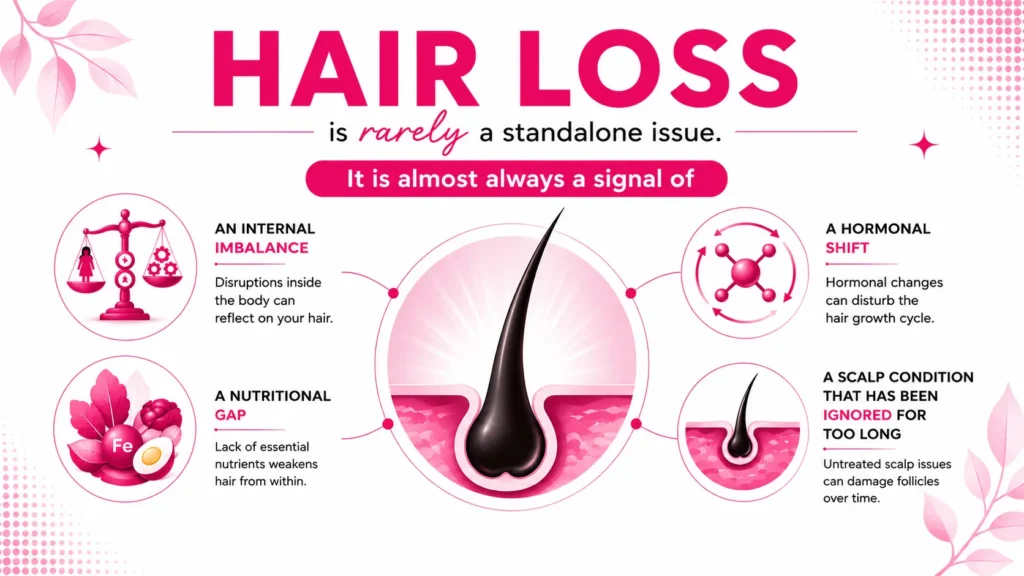
Hair loss is rarely a standalone issue. It is almost always a signal of an internal imbalance, a nutritional gap, a hormonal shift, or a scalp condition that has been ignored for too long. Before diving into treatment options, it is important to understand the nature of the problem itself.
Hair fall becomes a clinical concern when you shed more than 100 strands per day consistently over a period of weeks. In Chennai, several environmental and lifestyle factors accelerate this process beyond what genetics alone would cause.The Harvard T.H. Chan School of Public Health highlights the importance of balanced nutrition, protein, iron, and vitamins for maintaining healthy hair growth.
Hard water is one of the most underappreciated culprits. Chennai’s municipal water supply carries high levels of calcium and magnesium ions, which coat the hair shaft over time, making it brittle and prone to breakage. When combined with daily use of harsh sulphate shampoos, the damage compounds quickly.
Thermal stress is another silent aggressor. Many residents are exposed to both outdoor heat (particularly from April to July) and indoor air conditioning for extended periods. This cycle of extreme temperature changes strips moisture from the scalp, disrupting the natural sebum balance and weakening follicle anchoring.
Nutritional deficiencies, particularly of iron, Vitamin D, Vitamin B12, and zinc, are extremely prevalent in Chennai’s urban population both among those who eat meat and those who follow vegetarian diets.
Dandruff is far more than an aesthetic nuisance. Medically known as seborrhoeic dermatitis in its more severe form, dandruff involves an overgrowth of a yeast-like fungus called Malassezia on the scalp. This organism feeds on sebum and, in excess, triggers rapid skin cell turnover leading to the characteristic white or yellowish flakes, itching, and scalp redness.Left untreated, chronic dandruff creates a hostile environment for hair follicles.According to the American Academy of Dermatology, dandruff can be linked to scalp inflammation, excess oil production, and fungal overgrowth.
In Chennai’s climate, dandruff tends to be particularly stubborn. The humidity encourages fungal growth, while sweat accumulation on the scalp after commuting or outdoor activity creates the moist, oily environment in which Malassezia thrives. Seasonal flare-ups especially during the north-east monsoon are common.
Many people postpone seeking professional help because they assume the problem will resolve on its own. While some types of hair fall such as post-illness shedding or post-partum hair loss do normalise with time, others worsen significantly without targeted intervention.
There are clear signals that indicate it is time to stop experimenting with home remedies and consult a qualified specialist.These include: hair fall lasting more than three months without obvious cause, visible thinning at the crown or temples, bald patches appearing suddenly, a persistently flaky or oily scalp that does not respond to medicated shampoos, or burning and itching sensations on the scalp.
Mayo Clinic explains that dandruff is commonly caused by irritated, oily skin, dry skin, or a yeast-like fungus that naturally lives on the scalp.
Example: Consider the case of a 29-year-old software professional in Chennai who had been experiencing hair fall for almost eight months. She had tried four different brands of anti-hair fall shampoos, taken biotin supplements purchased online, and followed several home oil-massage routines all without improvement.Seeking professional hair loss treatment in Chennai at an early stage can significantly improve scalp health and prevent further follicle damage.
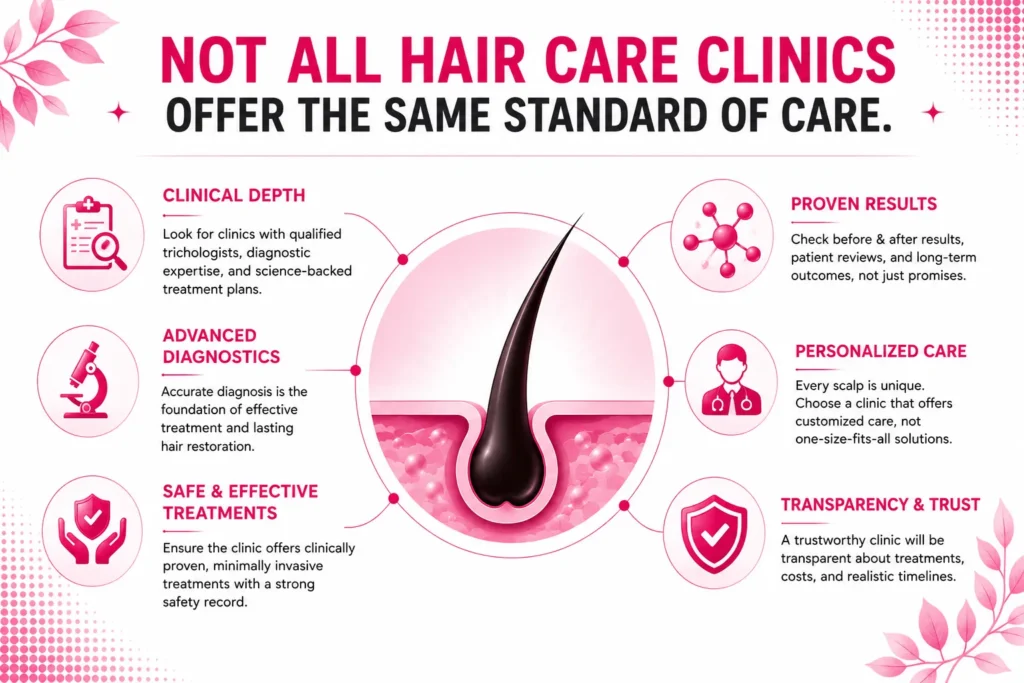
Not all hair care clinics offer the same standard of care. Chennai has seen a rapid growth in facilities that market themselves aggressively but lack the clinical depth to deliver consistent, lasting results. Knowing what to look for before booking a consultation can save you from wasted time and money.
The foundation of effective hair treatment is accurate diagnosis. A premium clinic does not rely on visual observation alone. Instead, it employs tools that allow the trichologist to assess the scalp and follicle condition at a microscopic level.
Trichoscopy the use of a dermatoscope or digital scalp analyser is now considered a standard diagnostic tool in quality clinics. It allows the specialist to examine hair shaft diameter, scalp vascularity, follicle density per square centimetre, and the presence of miniaturised follicles. This level of analysis can differentiate between androgenetic alopecia (genetic thinning), alopecia areata (autoimmune patchy loss),traction alopecia (caused by tight hairstyles), and cicatricial alopecia (scarring hair loss) all of which look superficially similar but require entirely different management strategies.
Blood work is equally critical. A thorough panel assessing thyroid function (TSH, T3, T4), complete blood count, serum ferritin, Vitamin D3, Vitamin B12, and hormonal markers gives the treating physician a comprehensive physiological picture. Without this data, treatment is essentially guesswork.
| Diagnostic Tool | Basic Salon / Spa | Clinical Hair Facility |
| Visual scalp inspection | Manual, unaided | Digital trichoscope with magnification |
| Scalp photography | Not available | High-resolution baseline imaging for tracking |
| Follicle density mapping | Not available | Per-cm² follicle count via scalp analyser |
| Hair shaft analysis | Not available | Identifies porosity, shaft damage, miniaturisation |
| Blood panel for root cause | Not available | Full hormonal, nutritional, and thyroid workup |
| Scalp pH and sebum testing | Not available | Calibrated sebumeter and pH strip analysis |
| Allergy or sensitivity patch test | Not standard | Conducted before all topical treatment protocols |
One of the clearest markers of a high-quality hair clinic is the degree to which treatments are personalised. Hair loss does not follow a universal pattern, and what works dramatically well for one patient may do nothing for another.Many clinics also recommend personalized hair care solutions to support ongoing scalp maintenance and long-term hair regrowth.
A clinic that prescribes the same protocol to every patient regardless of the type or severity of hair loss, the patient’s age, gender, hormonal profile, or scalp condition is not practising evidence-based medicine. It is offering a product, not a solution.
Effective personalised care considers multiple layers: the type of hair loss, the stage of progression (often graded using the Norwood scale for men and Ludwig scale for women), any underlying medical conditions, current medications that may be contributing to hair fall, lifestyle factors such as diet and stress levels, and the patient’s own goals and expectations. A well-designed treatment plan evolves over time, with scheduled follow-ups to assess progress and adjust protocols based on how the patient’s scalp is responding.
Qualifications matter significantly in a field as specialised as trichology and dermatology. Genuine hair clinics are headed by certified dermatologists or trichologists with formal postgraduate training. Many of the most reputable clinics in Chennai also maintain memberships with professional bodies such as the International Society of Hair Restoration Surgery (ISHRS), the Association of Hair Restoration Surgeons of India, or the Indian Association of Dermatologists, Venereologists, and Leprologists (IADVL).
Beyond credentials, patient outcomes speak for themselves. A clinic confident in its results will readily share before-and-after documentation (with patient consent), have verifiable Google reviews across hundreds of patients, and be willing to explain its protocols in transparent detail during the initial consultation.
Example: A 41-year-old businessman from Anna Nagar visited three different clinics in Chennai over a span of two years before finding meaningful results. The first clinic offered only a hair growth serum without any diagnostic workup. The second recommended an expensive hair transplant procedure before trying any non-surgical options.
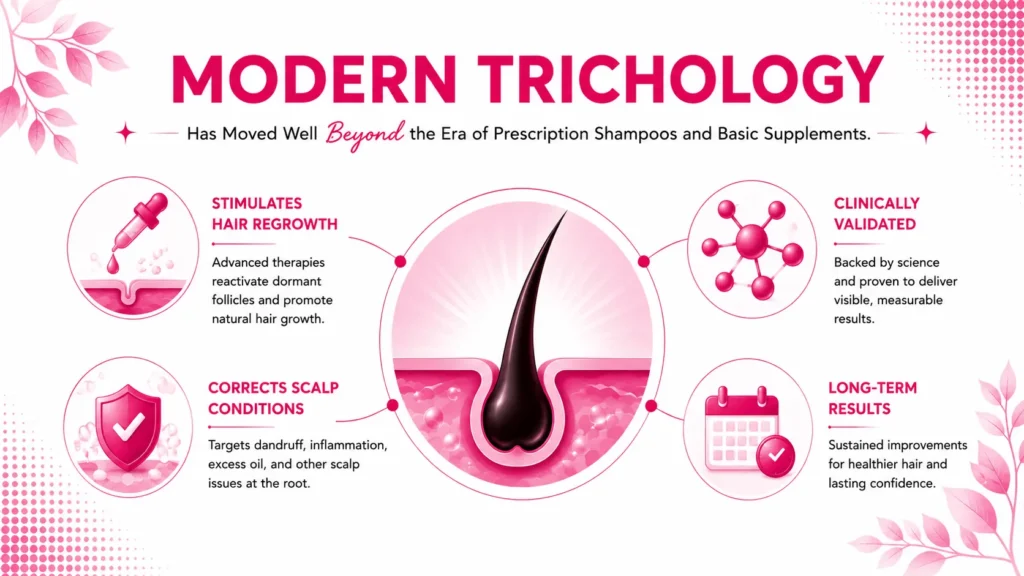
Modern trichology has moved well beyond the era of prescription shampoos and basic supplements. Today’s best hair clinic in Chennai has access to a range of clinically validated, minimally invasive treatments that can stimulate regrowth, correct scalp conditions, and sustain results over the long term.
Platelet-Rich Plasma (PRP) therapy has become one of the most widely recognised non-surgical treatments for hair regrowth globally, and for good reason. The procedure involves drawing a small amount of the patient’s own blood, processing it in a centrifuge to concentrate the platelet-rich fraction, and injecting this growth-factor-rich plasma directly into the scalp at the level of the hair follicles.
The growth factors within PRP including PDGF, VEGF, and TGF stimulate dormant follicles, improve blood circulation to the scalp, and extend the active growth (anagen) phase of the hair cycle. Most patients undergo three to six sessions spaced four to six weeks apart, with visible improvement in hair density typically noticed after the third session.
Mesotherapy is a complementary approach that involves microinjections of a customised cocktail typically containing vitamins, minerals, amino acids, and hair-growth stimulants such as biotin, finasteride, or minoxidil directly into the scalp’s mesoderm layer. Because these agents are delivered locally rather than systemically, side effects are minimal and absorption is highly targeted.
| Treatment | Mechanism | Best Suited For | Sessions Required | Downtime |
| PRP Therapy | Injects platelet growth factors to reactivate dormant follicles | Androgenetic alopecia, early thinning | 4–6 sessions, 4 weeks apart | None |
| Mesotherapy | Microinjections of vitamins, minerals, and growth stimulants into scalp | Diffuse hair fall, nutritional-deficiency thinning | 6–8 sessions, 2–3 weeks apart | Minimal redness |
| Low-Level Laser Therapy (LLLT) | Photobiomodulation to improve scalp blood flow and follicle metabolism | Mild to moderate thinning, post-PRP maintenance | 12–20 sessions, 2–3 per week | None |
| Topical Minoxidil (clinical grade) | Vasodilator that prolongs anagen phase and widens follicles | Male and female pattern hair loss | Daily application, ongoing | None |
| Microneedling (Dermaroller) | Creates micro-channels to enhance topical absorption and stimulate collagen | Combined with PRP or serums for enhanced penetration | Monthly, 6–8 sessions | 24–48 hrs mild redness |
For chronic dandruff and seborrhoeic dermatitis, clinical-grade treatment goes far beyond what any over-the-counter shampoo can achieve. Clinics typically employ a multi-pronged approach that addresses the fungal imbalance, reduces scalp inflammation, and restores the skin’s natural microbiome.Prescription-strength antifungal shampoos containing ketoconazole, ciclopirox olamine, or selenium sulphide are the first line of treatment for fungal dandruff.For inflammatory dandruff, low-concentration topical corticosteroid solutions may be prescribed for short-term use to reduce redness and itching. Scalp microbiome restoration treatments, using probiotic-based serums and prebiotic scalp masks, are newer additions to the trichological toolkit. These help re-establish the healthy bacterial community on the scalp that naturally keeps Malassezia populations in check offering a long-term preventive strategy rather than just symptomatic relief.
Achieving initial results through clinical treatment is only half the journey. Sustaining those results and preventing relapse requires an ongoing, structured maintenance plan. This is where many patients fall short, discontinuing treatment or follow-up as soon as visible improvement is noticed, only to see the problem return within months.
A well-designed maintenance programme includes scheduled periodic scalp assessments a personalised home-care routine using clinic-recommended products, dietary guidance tailored to the patient’s nutrient profile, and lifestyle modifications targeting sleep, stress, and hydration. Some patients may also be placed on low-dose maintenance PRP sessions (once every four to six months) to sustain the follicular stimulation achieved during the active treatment phase.
Example: A 35-year-old teacher from Velachery had successfully completed a six-session PRP course at a reputed trichology clinic. Her hair density had improved considerably and she was extremely satisfied with the results. However, she skipped her three-month follow-up, gradually stopped using the prescribed scalp serum, and returned to her old diet high in refined carbohydrates and low in protein.
Hair health is a long-term commitment, not a one-time fix. Chennai offers access to genuinely excellent trichological care but the outcomes you achieve depend heavily on choosing a facility with strong diagnostic foundations, personalised protocols, and a clear focus on sustainable results rather than quick marketing promises.
Whether you are dealing with early-stage hair fall triggered by nutritional gaps, a stubborn dandruff problem that has resisted every medicated shampoo you have tried, or visible thinning at the crown that is beginning to affect your self-confidence the right time to seek expert guidance is now. Waiting another six months while experimenting with unproven remedies rarely ends well. If you are experiencing persistent hair fall or scalp concerns, it is advisable to book a hair consultation with experienced specialists for an accurate diagnosis.
The Best Hair Clinic In Chennai provides professional scalp analysis, advanced diagnostic technology, and personalized treatments that target the root cause of hair fall instead of offering temporary solutions.
Most clinics offer PRP therapy, mesotherapy, dandruff treatments, scalp therapies, laser treatments, hair regrowth solutions, and customized scalp care plans based on individual hair conditions.
You should consult a professional clinic if you experience excessive hair shedding, visible thinning, bald patches, severe dandruff, itchy scalp, or continuous hair fall for more than three months.
Yes. The Best Hair Clinic In Chennai provides specialized dandruff treatments that help reduce fungal infections, scalp irritation, flaking, and inflammation while improving overall scalp health.
PRP therapy is considered a safe and minimally invasive procedure because it uses the patient’s own blood platelets to stimulate hair follicles and support natural hair regrowth.
Hair treatment results vary depending on the scalp condition and severity of hair loss. Most patients notice improvement in hair texture, reduced shedding, and better density within 3–6 months.
Yes. Professional hair clinics offer customized treatments for male pattern baldness, female hair thinning, postpartum hair fall, hormonal hair loss, and stress-induced hair shedding.
Common causes include stress, hormonal imbalance, dandruff, nutritional deficiencies, genetics, hard water exposure, pollution, unhealthy lifestyle habits, and improper scalp care.
Hair fall treatments help control excessive shedding, strengthen follicles, and improve scalp health significantly. Long-term results depend on consistent treatment, proper maintenance, and healthy lifestyle habits.
Professional clinics use digital scalp analysis, trichoscopy, follicle density mapping, blood tests, and scalp health evaluation to identify the exact cause of hair fall and recommend suitable treatments.