
Hair fall affects millions of people and often starts quietly with extra strands on your pillow, more hair in the shower drain, or a widening hair part. While losing some hair every day is normal, persistent shedding can signal underlying issues such as stress, poor nutrition, hormonal imbalance, or unhealthy hair habits. According to the American Academy of Dermatology, people normally lose 50-100 hairs daily, but noticeable thinning or excessive shedding may require attention. Hair loss is also one of the most common conditions treated by dermatologists worldwide.
Finding the best hair fall solution is not about chasing quick fixes. It starts with identifying the root cause and building the right combination of nutrition, scalp care, healthy habits, and targeted treatments. This guide explores practical solutions that support stronger, healthier, and fuller-looking hair.
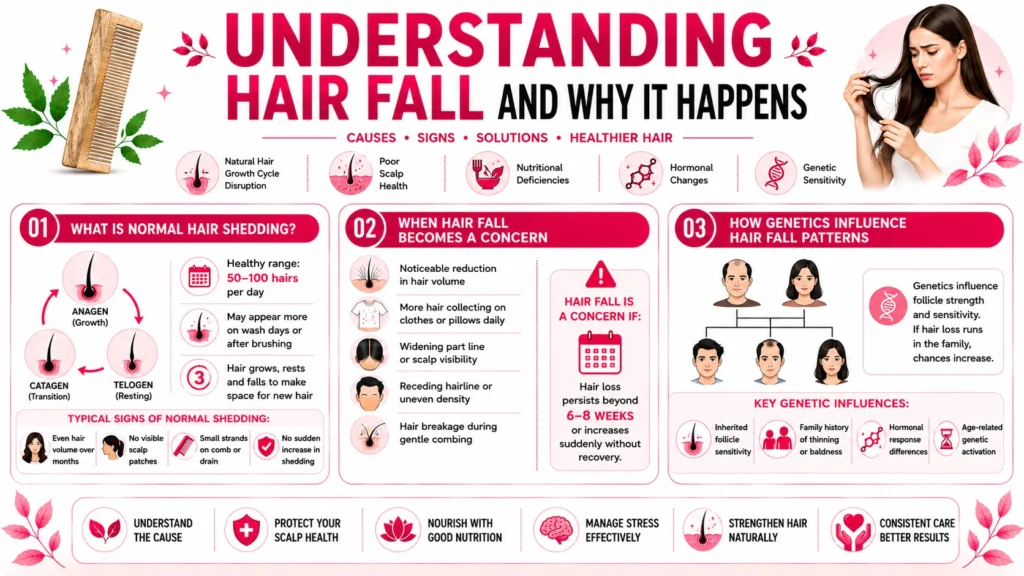
Hair fall happens as part of a natural biological cycle, but many people notice it only when it becomes visible or alarming. On average, a healthy person loses 50-100 hairs per day, according to the American Academy of Dermatology. However, when this balance shifts, hair starts thinning faster than it regrows. This imbalance can come from lifestyle habits, nutrition gaps, stress, or genetics.
To understand hair fall clearly, you need to break it into simple factors:
Normal hair shedding follows a cycle, not a random process. Every hair on your head goes through three stages: growth (anagen), transition (catagen), and resting (telogen). At any time, about 85–90% of your hair stays in the growth phase, while the rest naturally prepares to fall out.
Most people lose 50-100 hairs daily, and you may not even notice it. You often see this hair during washing, combing, or on pillows. For example, if you wash your hair every three days, you may notice more strands at once, but that still falls within the normal range.
Common signs of normal shedding include:
Hair fall becomes a concern when shedding exceeds the natural growth cycle and does not recover over time. Instead of occasional strands, you start noticing visible thinning or scalp exposure. Dermatologists often consider hair loss significant when shedding continues for more than 6-8 weeks without improvement.
You should watch for these warning signs:
Genetics play a major role in determining how, when, and where hair fall happens. If your family has a history of thinning hair or baldness, your chances increase significantly. This condition, known as androgenetic alopecia, affects both men and women, though patterns differ.
In men, genetics often causes a receding hairline and crown thinning. In women, it usually leads to overall hair thinning without complete baldness. Hormones like DHT (dihydrotestosterone) interact with genetically sensitive hair follicles and gradually shrink them over time.
Key genetic factors include:
Genetic Hair Fall Patterns Comparison:
| Factor | Men | Women |
| Pattern | Receding hairline, crown baldness | Diffuse thinning on top |
| Progression | Faster in early adulthood | Gradual over years |
| Outcome | Bald patches possible | Rare complete baldness |
| Trigger hormone | DHT sensitivity | Hormonal imbalance + DHT |
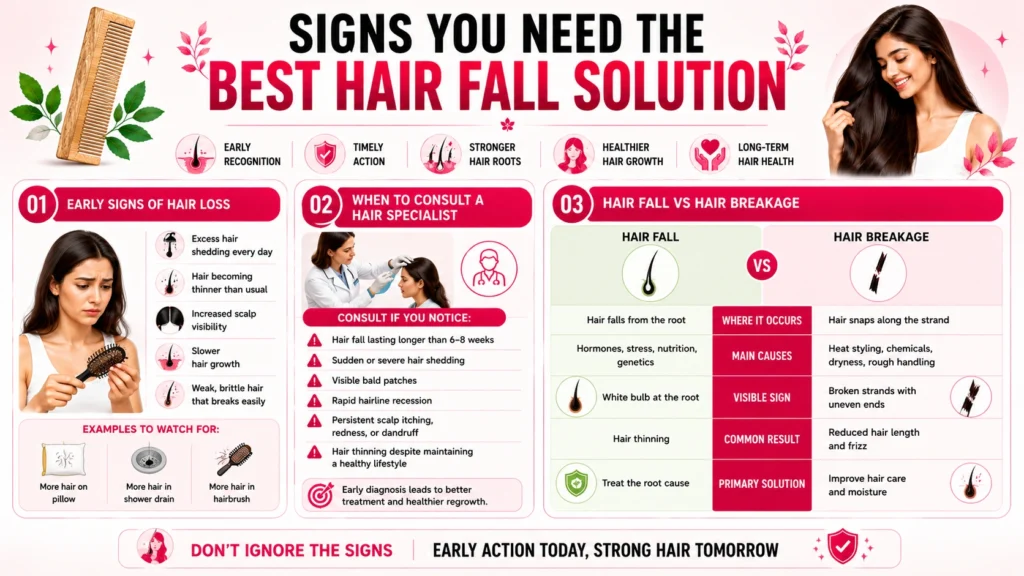
Hair fall does not become a serious concern overnight. In most cases, your scalp and hair give several warning signs before noticeable thinning occurs. Recognizing these early symptoms helps you take action before hair follicles weaken further. According to dermatology experts, early diagnosis often improves treatment outcomes because active hair follicles respond better to proper scalp care, nutrition, and targeted hair fall solutions.
Some of the most common warning signs include:
Ignoring these signs may lead to progressive hair thinning over time. Identifying the cause early allows you to choose the best hair fall solution and protect long-term hair health.
Hair loss usually begins with subtle changes that many people overlook. Instead of sudden baldness, you may first notice more hair on your pillow, in the shower drain, or on your hairbrush. These early symptoms often develop gradually as hair follicles become weaker.
Common early signs include:
For example, if your ponytail feels thinner than before or your hairline appears to recede slightly over several months, these may indicate early-stage hair loss. Taking action during this stage often provides better results than waiting until hair density reduces significantly.
While mild daily shedding is normal, persistent or excessive hair fall should not be ignored. If home care routines fail to improve your condition after several weeks, consulting a qualified hair specialist becomes important. Professional scalp analysis helps identify the exact cause, whether it relates to hormonal imbalance, nutritional deficiencies, stress, genetics, or scalp disorders.
You should consider professional evaluation if you notice:
Early diagnosis allows specialists to recommend personalized treatments that improve scalp health and support healthier hair regrowth.
Many people confuse hair fall with hair breakage, but both conditions have different causes and require different solutions. Hair fall occurs when the entire hair strand, including the root, sheds naturally from the follicle. Hair breakage happens when the hair shaft snaps because of dryness, chemical damage, heat styling, or rough handling.
| Condition | Hair Fall | Hair Breakage |
|---|---|---|
| Where it occurs | Hair falls from the root | Hair snaps along the strand |
| Main causes | Hormones, stress, nutrition, genetics | Heat styling, chemicals, dryness |
| Visible sign | White bulb at the root | Broken strands with uneven ends |
| Common result | Hair thinning | Reduced hair length and frizz |
| Primary solution | Treat the root cause | Improve hair care and moisture |
For example, finding long strands with a white bulb attached usually indicates hair fall, whereas short broken pieces of hair often point to hair breakage. Identifying the difference helps you choose the most effective hair care routine and the best hair fall solution for your specific condition.
Hair fall rarely happens because of just one reason. In most cases, multiple internal and external factors work together and weaken hair over time. Dermatology research shows that conditions like stress, nutritional imbalance, and hormonal shifts contribute to a large percentage of non-genetic hair loss cases worldwide.
You can think of hair fall as a signal from the body that something inside needs attention. For example, a busy lifestyle with irregular meals, poor sleep, and high stress often creates a direct impact on hair strength within a few months. Similarly, frequent heat styling or chemical treatments can weaken the hair shaft and increase breakage.
Hair depends heavily on nutrients because each strand grows from living follicles. When your body lacks essential vitamins and minerals, it prioritizes vital organs first, and hair health gets affected early.
For example, low iron levels often lead to increased shedding because iron helps red blood cells carry oxygen to hair follicles. Similarly, insufficient protein intake weakens keratin structure, making hair fragile and thin.
Common deficiencies linked to hair fall:
Stress affects hair more deeply than most people realize. When the body stays under constant stress, it releases cortisol, a hormone that can disrupt the natural hair growth cycle. This often pushes more follicles into the resting phase, leading to increased shedding after a delay of a few weeks.
Lifestyle habits also play a major role. Poor sleep, irregular meals, and lack of physical activity reduce circulation and weaken follicle strength over time. For example, students or professionals going through exam pressure or work deadlines often notice sudden hair fall 1–2 months later.
Common stress-related triggers:
Hormones directly control hair growth cycles, so even small fluctuations can affect hair density and shedding patterns. Conditions like thyroid imbalance, PCOS, pregnancy, and menopause often trigger noticeable changes in hair texture and volume.
When hormones shift, hair follicles react quickly by slowing growth or entering the shedding phase earlier than normal. This creates diffuse thinning or sudden hair loss depending on the condition.
Common hormonal causes:
The best hair fall solution focuses on fixing internal health, improving scalp condition, and building consistent habits instead of relying on quick fixes. Dermatologists often emphasize that long-term improvement happens when you combine nutrition, care routine, and lifestyle balance together.
Hair grows from living follicles, so you must support them daily. For example, someone who improves diet but continues using harsh shampoos may still experience breakage. Similarly, good hair care without proper nutrition often gives slow results.
Hair needs steady nutrition because follicles stay active 24/7. A balanced diet directly improves hair strength, thickness, and growth speed. Studies show that protein and micronutrient deficiencies significantly increase hair shedding risk.
For example, people who consume low-protein vegetarian diets without proper balance often notice weaker hair strands over time.
Include these foods regularly:
A consistent hair care routine protects hair from daily damage and supports long-term strength. Many people increase hair fall unknowingly by switching products too often or using harsh treatments.
For example, frequent heat styling without protection weakens hair cuticles and leads to breakage that looks like hair fall.
A strong routine includes:
Simple weekly routine example:
Healthy hair starts with a healthy scalp. When the scalp becomes oily, dry, or clogged, follicles struggle to function properly. Poor scalp health often leads to weak roots and increased shedding.
Key scalp care actions:
Scalp Health Comparison Table:
| Scalp Condition | Cause | Hair Impact | Solution |
| Oily scalp | Excess sebum | Blocked follicles | Regular cleansing |
| Dry scalp | Lack of moisture | Itching, breakage | Hydration oils |
| Product buildup | Styling products | Weak roots | Weekly detox wash |
| Poor circulation | Stress, inactivity | Slow growth | Scalp massage |
Simple scalp massage for 5-10 minutes improves blood flow and supports nutrient delivery to follicles. People who maintain scalp hygiene consistently often notice reduced hair fall within a few weeks.
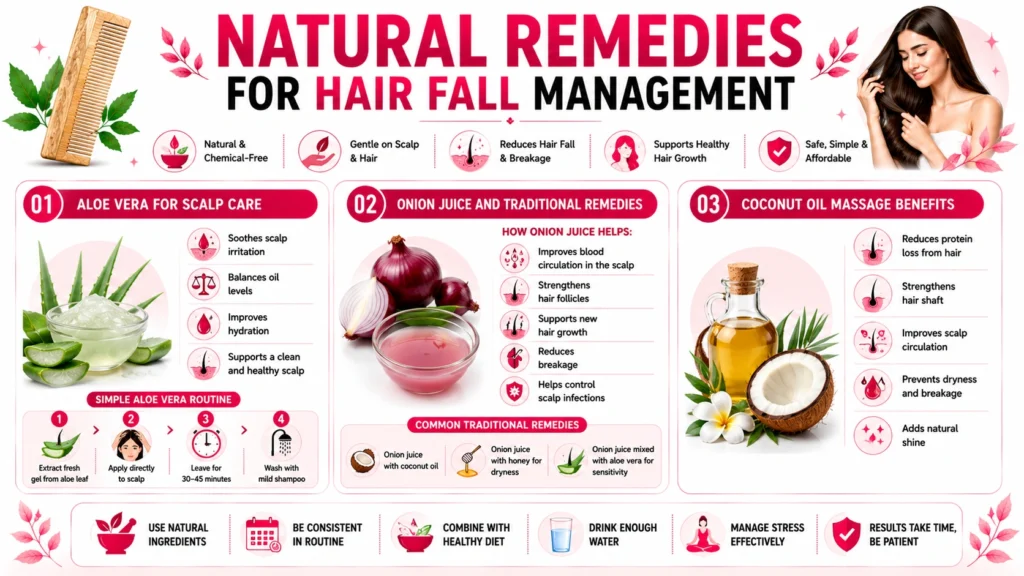
Natural remedies offer simple, affordable support for hair fall management, especially when you combine them with a healthy diet and proper routine. These remedies do not replace medical treatment, but they help improve scalp condition, reduce breakage, and support stronger growth over time.
Many people prefer natural methods because they avoid harsh chemicals and work gently on the scalp. For example, someone dealing with early-stage hair fall often notices improvement when they add aloe vera or oil massage to their weekly routine.
Aloe vera supports scalp health by soothing irritation, balancing oil levels, and improving hydration. It contains enzymes and vitamins that help maintain a clean and healthy scalp environment, which is essential for strong hair growth.
For example, people with itchy or flaky scalps often see improvement after applying fresh aloe vera gel 2-3 times a week.
Simple Aloe Vera Routine:
Onion juice remains one of the most widely used traditional remedies for hair fall because it contains sulfur, which supports collagen production and strengthens hair follicles. Many people use it to improve hair density and reduce shedding naturally.
For example, individuals experiencing early thinning often report reduced hair fall after applying onion juice twice weekly for a month.
How onion juice helps:
Common traditional remedies:
Coconut oil has been used for generations to strengthen hair and reduce protein loss. It penetrates the hair shaft more effectively than many other oils, which helps reduce breakage and dryness.
For example, people living in humid climates often use coconut oil regularly to protect hair from environmental damage and maintain moisture balance.
Key benefits of coconut oil:
Hair fall does not improve with quick fixes it improves when you understand the root cause and act consistently. From nutrition and stress balance to scalp care and natural remedies, every step you take plays a role in restoring stronger, healthier hair. Studies consistently show that factors like nutrient deficiencies, hormonal imbalance, and lifestyle stress contribute heavily to hair thinning, which means real improvement starts from inside the body, not just outside treatments.
The best hair fall solution always combines three things: a balanced diet that feeds your follicles, a consistent hair care routine that protects strands, and a healthy scalp that supports growth.
The best hair fall solution combines a balanced diet, proper scalp care, stress management, and consistent hair care habits. No single product works alone.
Hair fall cannot stop completely because shedding is natural. However, excessive hair fall can reduce significantly with the right care and treatment.
On average, losing 50–100 hairs per day is normal, according to dermatology experts. More than this consistently may need attention.
Common deficiencies include iron, vitamin D, biotin, zinc, and protein. These nutrients directly affect hair strength and growth.
Most people notice improvement within 4–8 weeks after correcting diet, routine, and scalp care habits.
Yes, oiling improves blood circulation and strengthens roots, but it does not solve hair fall caused by internal issues like hormones or nutrition.
Yes, high stress increases cortisol levels, which can push hair into the shedding phase, leading to temporary or chronic hair fall.
Protein-rich foods, leafy greens, nuts, seeds, eggs, and fruits rich in vitamins support healthier hair growth.
Not always. It depends on your scalp type. Oily scalps may need frequent washing, while dry scalps should avoid daily shampooing.
If hair fall continues for more than 6-8 weeks, causes visible thinning, or appears in patches, you should consult a dermatologist.